
British telecom giant Vodafone Group plc on Friday won an arbitration against the Indian government over a demand for Rs 22,100 crore in taxes using retrospective legislation.

The S&P BSE Sensex has gained 149 points to open at 25,802.

The bill to nullify retrospective taxation offers a fair solution within the framework of Indian law and Parliamentary sovereignty to companies which have been subjected to such demands, Finance Secretary T V Somanathan said on Thursday. Finance Minister Nirmala Sitharaman introduced 'The Taxation Laws (Amendment) Bill, 2021' in the Lok Sabha that seeks to withdraw tax demands made using a 2012 retrospective legislation to tax the indirect transfer of Indian assets. The Bill provides for the withdrawal of tax demand made on "indirect transfer of Indian assets if the transaction was undertaken before May 28, 2012 (i.e. the day the retrospective tax legislation came into being)."

A charge-sheet against Chandra and 12 others was filed.

As the government began consultations with stakeholders on raising gas prices, gas producers and consumers met a committee of secretaries separately with their pleas on the issue.

The pandemic has brutally highlighted the inadequacy of India's administrative systems. And, the government has demonstrated its culpable inability to speed up vaccination in a timely manner, says Jaimini Bhagwati.

On Sunday, angry villagers of Leelala laid their own foundation stone - which had 'aam aadmi' inscribed as the name of the chief guest - still claiming the project was to come up in their village.

Participants are eagerly waiting for the key macrodata -- IIP and CPI numbers due to be released later today.

Sebi to fix promoters' side deals with PE investors

Why does the world's fastest-growing major consumer of energy fail to attract investments in oil and gas? This is a question worth pondering after private sector conglomerate Reliance Industries Ltd (RIL) failed to close a $15-billion downstream asset deal with Saudi Arabia's national oil company, Aramco. It's understandable if multi-billion dollar investments in oil and gas projects or deals involving state companies that need to traverse a complex bureaucracy at state and federal levels and the corridors of ministries unravel. However, Mukesh Ambani-run RIL, India's most successful energy company, is not typically known to fumble on closing deals (Ambani closed deals worth around Rs 2 trillion early last year in telecom and retail with blue chip investors).

Top management of firms should be summoned for a few specified reasons and after written justification at a senior level.

A reception often reserved for rockstars came the way of mining mogul Anil Agarwal when he started revealing nuggets of his ascent from a scrap-metal dealer to one of India's most prominent self-made industrialists on social media. And now he has been flooded with booking writing proposals and has even been offered money for a biopic. In February this year, Agarwal, 68, started tweeting his journey from Bihar to Mumbai first and then to London to head a globally diversified natural resources company with interests in zinc-lead-silver, iron ore, steel, copper, aluminium, power, oil and gas.
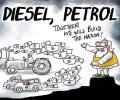
The government on Friday slapped an export tax on petrol, diesel and jet fuel (ATF) while also joining nations like the UK in imposing a windfall tax on crude oil produced locally. A Rs 6 per litre tax on export of petrol and ATF and Rs 13 per litre tax on export of diesel is effective from July 1, finance ministry notifications showed. Additionally, a Rs 23,250 per tonne tax was levied on crude oil produced domestically.

Oil and Natural Gas Corporation had in 2007 farmed out 15 per cent stake in the KG-DWN-98/2 block, which sits next to Reliance Industries' KG-D6 block, to Brazil's state-controlled oil firm Petroleo Brasileiro SA or Petrobras.

Poor disclosure among India-listed firms is a turnoff for foreign investors.

In a most perverse example of tax bullying, someone I know has got by three such notices reopening his assessment minutes before the midnight deadline of June 30, reveals Debashis Basu.

Financials were among the top losers along with Sun Pharma and index heavyweight Reliance Industries

As fuel prices surged in September, the government's decision to ask companies to cut price by Rs1 each on a litre of petrol and diesel came as a dampner for private players.

In a move that may boost the Indian hydrocarbon industry and bring more investments into the sector, the Union Cabinet on Wednesday decided to give marketing freedom to domestic crude oil producers, allowing them to sell petroleum to any company in the local market. The move is set to be beneficial for major crude oil producers, such as state-run Oil and Natural Gas Corporation (ONGC) and Oil India, and private sector majors like Vedanta's Cairn Oil and Gas and Reliance Industries. As of May 31, India was dependent on imports for 86 per cent of its crude oil consumption; domestic production sufficed the remaining 14 per cent demand.
.jpg)
Mayank Ashar talks about India's business environment.
Sensex lacklustre, bluechips in focus.

Investors sought to book profits at attractive valuations after recent run up in last few trading sessions.

In 2017, a consortium led by Russian state oil company Rosneft agreed to buy Essar Oil for $12.9 billion in India's biggest foreign acquisition of a homegrown company. Rosneft's buyout of Essar's assets was meant to herald a wave of energy investments in India - over six decades after Esso, Caltex and Shell invested in India's refining sector in the 1950s. But the government has tripped up in its efforts to sell Bharat Petroleum Corporation Ltd (BPCL), formerly Burmah Shell, a blue chip public sector company. Bidders include a couple of global funds and resources firm Vedanta.

Transparency is more than welcome, but govt should not look vindictive.

The government has given up plans to reconvene a parliament session to secure approval for a common goods and services tax.

Domestic deals were the flavour of the month as there were 20 such transactions worth $2.77 billion in June 2015.
Markets could slide again owing to conditions in Europe and the US.

'It is my duty to give the govt the right price of crude oil.'
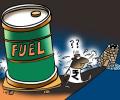
The windfall tax on oil produced within India and fuel exported overseas will make up for more than three-fourths of the revenue that the government lost when it cut excise duty on petrol and diesel to cool soaring inflation, industry sources said. India on July 1 joined a select league of nations globally that have taxed windfall gains accruing to oil companies from soaring energy prices. The government slapped a Rs 6 per litre tax on the export of petrol and jet fuel (ATF) and Rs 13 a litre on the export of diesel effective July 1. Additionally, a Rs 23,250 per tonne tax was levied on crude oil produced domestically.

Delhi Police on Thursday arrested 2 more persons in connection with the corporate espionage case.

Delhi Police Crime Branch raided the office of a petrochemical co.

Analysts refuse to read too much into the early birds numbers.

For simplification and a sharper strategic focus, BHP Billiton has been reassessing its global assets portfolio.

Other shortlisted chief executives include Abdulrahman Ali Al-Abdulla of Muntajat, Peabody Energy's Gregory Boyce, Pailin Chuchottaworn of PTT Public Company Ltd, Repsol's Antonio Brufau and Ian Taylor of Vitol.

No period in the recent history of Indian oil and gas sector will perhaps leave its long- lasting imprint than 2010 that saw the unfolding of two events that could shape the future of this fast growing sphere.

22 companies won bids for the 31 contracts on offer; 15 were new entrants to the oil and gas business. Three years on, none of them have started production.

There will be capital gains tax of 20 per cent with indexation.

It is also understood that scope of this audit will far exceed the normal course of audit by CAG and the prime objective may be to detect fraud, if any, by RIL allegedly in collusion with oil regulator DGH and Ministry of Petroleum and Natural Gas.

A casual worker employed at the Defence Ministry was arrested on Tuesday for allegedly providing forged identity card to a key accused in petroleum ministry leaks case while police maintained that no sensitive documents were leaked or stolen from the defence ministry.

India Inc can't trim salaries, but it can give shareholders a little more information on why senior executives are getting such fancy compensation packages.
